Overview
As Principal Solutions Architect supporting the U.S. Army’s XM30 Infantry Fighting Vehicle (IFV) program, I led the design and deployment of AI-defined digital engineering architectures that transformed how complex defense systems are conceived, evaluated, and governed. This work delivered an end-to-end AI platform—integrating data, models, analytics, and human decision authority—to compress decision timelines, expand analytical fidelity, and improve executive confidence in billion-dollar lifecycle decisions.
This initiative represents my most recent experience implementing a production-grade, enterprise AI system spanning architecture, governance, delivery, and adoption at scale. Below is summary of my work using the STAR format and here is a presentation overview of this case study.
Situation
The U.S. Army launched the XM30 Infantry Fighting Vehicle as part of its modernization strategy to replace the Bradley Fighting Vehicle with a digitally engineered, survivable, and affordable next-generation combat system. XM30 was designated a Digital Engineering Pathfinder, requiring the Army to operationalize model-based systems engineering (MBSE) at unprecedented scale across requirements, architecture, performance trades, and lifecycle cost.
However, legacy engineering workflows were fragmented:
-
Engineering data was siloed across documents, tools, and organizations
-
Trade studies took months, limiting iteration and early cost control
-
Senior leaders relied on summarized results rather than full-fidelity data
-
No scalable mechanism existed to apply AI across the end-to-end engineering lifecycle
The program needed a new architectural paradigm—one that could unify data, models, analytics, and human judgment into a single, trusted decision environment.
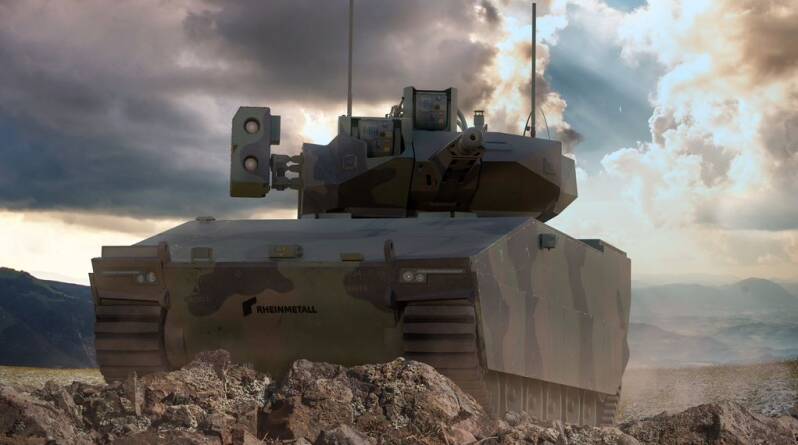
U.S. Army XM30 Mechanized Infantry Combat Vehicle
Task

As Principal Solutions Architect, my task was to architect and operationalize an AI-enabled digital engineering platform that:
-
Integrated requirements, system models, simulations, cost, and sustainment data
-
Enabled agentic AI to automate analysis, synthesis, and traceability
-
Preserved human-in-the-loop authority for acquisition and engineering decisions
-
Scaled securely across government, industry, and research partners
-
Reduced decision latency while increasing analytical rigor and transparency
The mandate was not research or experimentation—it was production delivery in support of an active Army acquisition program.
Action
I led the end-to-end architecture, delivery, and governance of the XM30 AI-defined digital engineering environment.
AI-Defined Reference Architecture
-
Designed a cloud-native, microservices-based architecture integrating enterprise systems (i.e., MBSE tools, data pipelines, analytics engines, and visualization layers) using C4 diagrams and intelligent automation
-
Partnered with Technical Delivery Teams to established authoritative data fabrics linking requirements, SysML/UAF models, simulations, and lifecycle cost data
-
Implemented security frameworks (e.g., OAuth/Okta integration, RLS) and enterprise integration patterns (e.g., MCP, A2A) to enable multi-vendor participation
Agentic AI & Decision Intelligence
-
Architected agent-based AI workflows to:
-
Ingest and normalize heterogeneous engineering data via containerized solutions (i.e., Kubernetes and Amazon EKS)
-
Execute automated trade-space exploration and sensitivity analysis to scale AI Ops across business units
-
Generate traceable explanations linking requirements → design → cost → risk to monitor drift, bias, and failure modes in probabilistic AI outputs
-
-
Deployed LLM-enabled RAG to allow engineers and leaders to interrogate models, assumptions, and results in natural language
Human-Centered Governance
-
Embedded human approval checkpoints at every decision boundary
-
Defined Responsible AI guardrails for explainability, provenance, and access control to include kill-switches and rollback mechanisms
-
Ensured AI outputs augmented—not replaced—engineering judgment and aligned to technology strategy, the embedded intelligence ecosystem, and organizational change management
Operationalization
-
Transitioned the platform from R&D pilot to production-grade capability using modern DevOps practices, supporting live program reviews for cross-functional teams
-
Enabled analytics-driven design reviews processing ~100 million engineering data points—far beyond what traditional document-based reviews could handle while remaining grounded in operational reality

Result
The AI-defined architecture delivered measurable, executive-level outcomes:
-
Decision latency reduced from months to days, enabling faster design-to-cost tradeoffs
-
Trade-study cycles compressed from months to weeks, increasing iteration velocity
-
Enabled full-fidelity analysis of ~100M data points during design reviews, replacing summarized or sampled data
-
Improved confidence in early lifecycle decisions with potential nine-figure cost implications
-
Established a repeatable digital engineering + AI reference architecture now used as a benchmark for future Army modernization programs
Most importantly, the XM30 effort demonstrated how agentic AI can be responsibly deployed at enterprise scale—integrating complex data, automating analysis, and accelerating outcomes while keeping humans firmly in control.
Why This Matters Beyond Defense
While executed in a defense context, the architectural pattern is industry-agnostic:
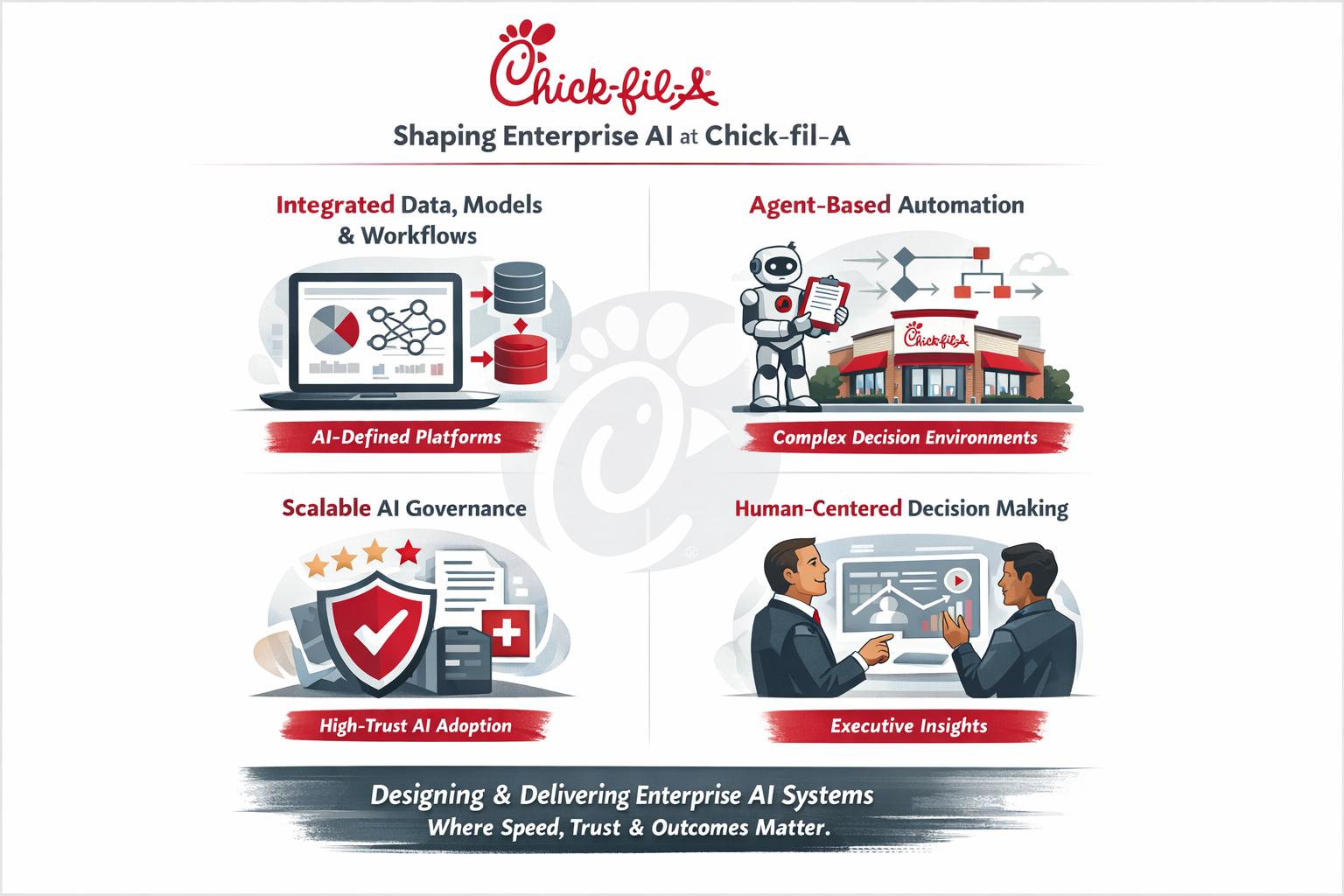
-
AI-defined platforms that integrate data, models, and workflows
-
Agent-based automation for complex decision environments
-
Scalable governance for high-trust AI adoption
-
Human-centered design for executive decision-making
This experience directly informs how I design and deliver enterprise AI systems in commercial environments—where speed, trust, and measurable outcomes matter just as much.
Create Your Own Website With Webador